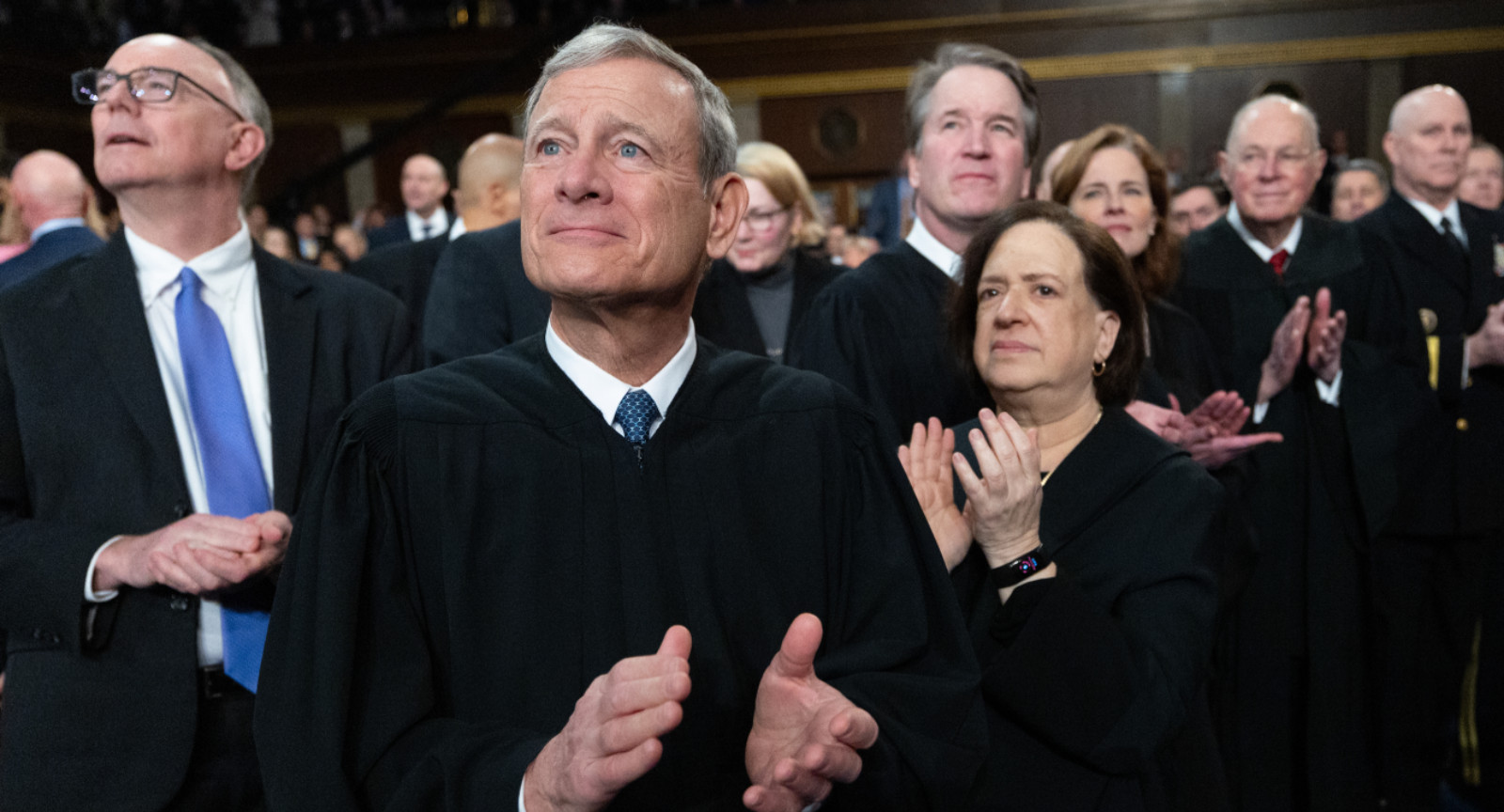
Justices announced they will hear oral arguments in Suncor v. Boulder County Commissioners on October 5, the opening day of the high court’s next term.
At issue is whether cities and counties can weaponize state nuisance laws—traditionally reserved for neighbor-to-neighbor property disputes—to extract massive damages from international oil and gas companies for their alleged role in worldwide emissions.
Boulder County officials and other local leaders filed the original suits claiming energy firms should pay for the supposed local harms of climate change.
They argue state law gives them the authority to seek compensation proportional to global impacts.
“There is no constitutional bar to states addressing in-state harms caused by out-of-state conduct, be it the negligent design of an automobile or sale of asbestos,” lawyers for Boulder County wrote in a filing to the high court.
Energy companies push back hard, insisting the Clean Air Act already occupies the field of regulating emissions that cross state and national borders.
They argue that allowing these lawsuits would circumvent federal law and constitutional limits on state power.
“Seeking injury in the form of physical harms allegedly caused by global emissions, as petitioners do, is just an indirect method of regulating interstate and international emissions,” lawyers for the oil company wrote.
Legal observers on the right see the case as far more than a technical dispute over nuisance statutes.
Michael Greve, a law professor at George Mason University, voiced deep concern that the Court must impose clear, uniform rules rather than leave the mess to a dysfunctional Congress.
“You cannot wait for Congress to come around and organize this universe,” Greve said. “It cannot decide what belongs to which state and even if it were it would decide that on the basis of sort of political convenience not constitutional propriety.”
Greve’s call for judicial clarity reflects a broader conservative worry: without firm constitutional guardrails, activist blue-state governments and deep-blue cities will keep trying to micromanage the entire national energy economy through creative litigation.
Daniel Rodriguez, a Northwestern University law professor more sympathetic to the local governments, downplayed those fears.
He maintained that Colorado’s approach stays within state boundaries and that Suncor’s constitutional objections lack force.
“Just the fact that a law has extra-territorial effects is not enough to raise constitutional problems,” Rodriguez said.
Yet O.H. Skinner, executive director of the Alliance for Consumers, framed the case as a textbook example of political polarization driving policy by lawsuit.
He warned that progressive attorneys general and county officials will keep returning to the courthouse to impose their preferred energy agenda on the rest of the country.
“You’re going to see people come back to the till again and again in an attempt to govern the national economy from state laws,” Skinner said.
“The answer of ‘Well, Congress could just pass a uniform law that tramples all the states equally is a really sad outcome because we are supposed to have a federal system for a reason,” Skinner added.
Skinner drove home the stakes with a pointed cultural warning that resonates with many conservatives.
“I personally don’t want to live in Gavin Newsom’s America where he’s determining every single thing that happens even for a resident in Plano, Texas,” Skinner said. “But I think all of us should be very nervous about that reality.”
That concern sits at the heart of the conservative case against these climate suits.
If localities in Colorado or California can successfully demand damages from energy companies for emissions occurring anywhere on the planet, the practical effect would be state-level regulation of the national and even international energy market.
Producers would face a patchwork of conflicting liabilities, higher costs, and reduced investment—outcomes that hit American consumers with higher prices at the pump and on their utility bills.
Previous Supreme Court precedent on interstate commerce already cautions against such overreach.
Allowing these novel nuisance claims to proceed risks turning every progressive district attorney into a de facto national climate regulator, sidelining both Congress and the executive branch.
The justices will hear arguments October 5 and are expected to issue a ruling by the end of the term in June 2027.