New attacks in the Middle East, threatening the shaky ceasefire between the US and Iran Former NATO Cmdr. James Stavrakis on Friday dismissed Iran’s declaration that the Strait of Hormuz is open amid a shaky ceasefire with the U.S. as “nonsense.”
New attacks in the Middle East, threatening the shaky ceasefire between the US and Iran
New attacks in the Middle East, threatening the shaky ceasefire between the US and Iran
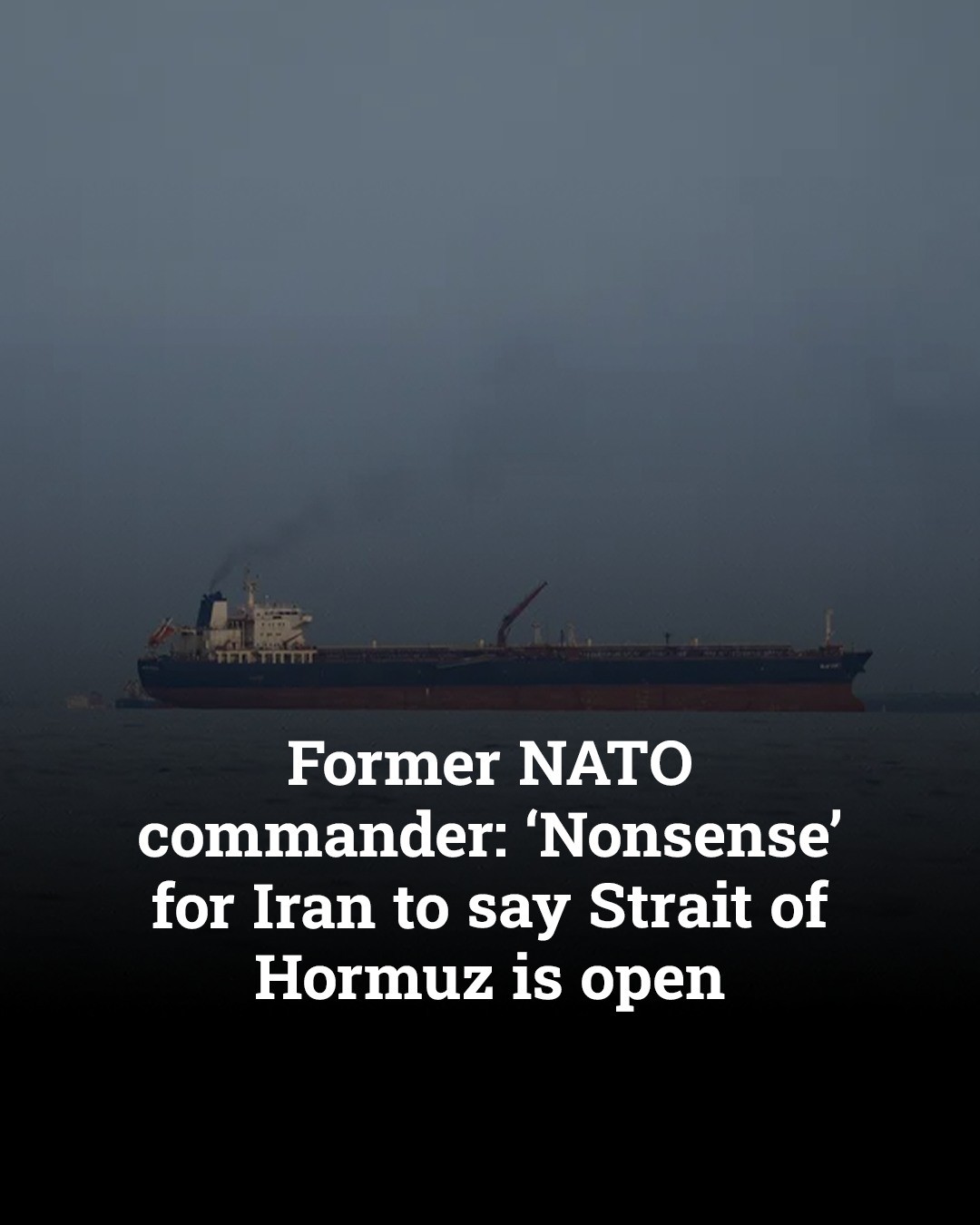
Former NATO Cmdr. James Stavrakis on Friday dismissed Iran’s declaration that the Strait of Hormuz is open amid a shaky ceasefire with the U.S. as “nonsense.”
Iranian Deputy Foreign Minister Saeed Khatib Zadeh said the strait was open, but vessels would need to coordinate with Iran’s military, citing “technical restrictions because of the war zone and because of many arrangements that Iran did during the war, during this aggression against Iran.”
Stavrakis, after viewing a clip of Khatib Zadeh’s explanation, said on CNN, “It’s all nonsense.”
“He is attempting to exert sovereign control over the Strait of Hormuz. That’s illegal under international law,” the ex-NATO chief continued. “The strait is narrow, it connects two bodies of international waters and under every, every angle of international maritime law, therefore, the strait enjoys the right of transit passage, technical term.”
Meaning any nation can go through it any time, conducting normal operations including military ships,”
“Meaning any nation can go through it any time, conducting normal operations including military ships,” he added. “So, for him to say, ‘Oh, it’s open but we’ve got control and you’ve got to check in with us and’ — he didn’t even mention the tolls that he has been charging the two or three ships that are allowed through.”
President Trump on Thursday accused Iran of “doing a very poor job, dishonorable some would say, of allowing Oil to go through the Strait of Hormuz.” Iran shut down the choke point again Wednesday, after the regime reopened it in compliance Trump’s demands to end the conflict.
It was closed in response to Israel’s barrage of attacks against Hezbollah, which Iranian officials called for an end to. The U.S. and Israel have maintained that Lebanon was not included in the peace deal. Iran and Pakistan — which acted as a mediator — have said the opposite.
Trump later Thursday pressed Israeli Prime Minister Benjamin Netanyahu to scale back Israel’s military bombardment in Lebanon. In response, Netanyahu instructed his Cabinet to open negotiations with Beirut, though the attacks have not stopped.
Trump initially proposed that the U.S. and Iran form a “joint venture” to toll vessels passing through the strait. Iran conceived the plan to have ships pay fees as part of its reconstruction effort, but oversight of the tolling program was not included in the ceasefire deal.
There are reports that Iran is charging fees to tankers going through the Hormuz Strait
“There are reports that Iran is charging fees to tankers going through the Hormuz Strait — They better not be and, if they are, they better stop now!” Trump wrote Thursday on Truth Social.
Iranian officials said oil tankers will be charged the cryptocurrency equivalent of $1 for each barrel of oil on board.
Around 20 percent of the world’s oil and gas passes through the major trading corridor. Though global oil prices started to decline shortly after the U.S. and Iran reached a deal on Tuesday, those prices have stayed high as of Friday.
The price of international benchmark Brent crude remains at just more than $95 per barrel. The U.S. benchmark West Texas Intermediate, meanwhile, showed trading at more than $97. The national average for gas in the U.S. reached $4.15, 1 cent below where it was on Thursday, according to AAA.