The Supreme Court declined to intervene in Ohio’s Republican primary election, rejecting a congressional candidate’s request to be restored to the ballot. The decision came just as early voting was set to begin
The decision came just as early voting was set to begin
The Supreme Court declined to intervene in Ohio’s Republican primary election, rejecting a congressional candidate’s request to be restored to the ballot. The decision came just as early voting was set to begin.
The candidate, Samuel Ronan, previously ran for chair of the Democratic National Committee. He later launched a campaign to challenge Republican Rep. Mike Carey in his congressional district, Courthouse News Service reported.
Ronan’s candidacy was challenged by a voter who argued he was not a legitimate member of the Republican Party. Ohio election officials subsequently removed him from the primary ballot.
Ronan filed an emergency application with the Supreme Court seeking reinstatement. He argued the decision to remove him was based on his political speech.
“By their own written admission, [Ohio Secretary of State Frank LaRose] removed Ronan from Ohio’s Republican primary ballot based solely on the content of his political speech,” Ronan wrote. “But Ronan did not lie.”
Ronan said his campaign reflected a shift in political alignment rather than a strategy to mislead voters. He argued that candidates changing party affiliation is not uncommon in American politics.
That is not a ‘strategic candidacy’ or some kind of trick,” Ronan wrote
“That is not a ‘strategic candidacy’ or some kind of trick,” Ronan wrote. “It is what countless politicians, including Ronald Reagan and Donald Trump, have done before Ronan.”
Mark Brown, an attorney at Capital University Law School representing Ronan, criticized the outcome. “We are disappointed,” Brown said.
Brown alleged that Ronan’s opponent interfered with his ballot access. He said Rep. Carey worked with the Ohio Republican Party to challenge the candidacy.
Brown also raised concerns about potential bias among election officials. He said a member of the Franklin County Board of Elections should have recused herself from the decision.
“One of the board members, Meredith Freedhoff, is the second-highest ranking officer in the Ohio Republican Party,” Brown said. “She sat on a case where her own organization was involved.”
Ohio Secretary of State Frank LaRose defended the decision to remove Ronan from the ballot. He said Ronan misrepresented his party affiliation on official forms.
Falsifying the election candidacy declaration is a felony of the fifth degree,” LaRose wrote
“Falsifying the election-candidacy declaration is a felony of the fifth degree,” LaRose wrote. He said Ronan declared he was a Republican but continued to advocate for Democrats to run in Republican primaries.
LaRose cited Ronan’s social media posts as evidence. He pointed to statements encouraging Democrats to “infiltrate Republican spaces and primary them.”
Ronan disputed those claims and argued the process was influenced by party interests. He said the protest against his candidacy was backed by the Ohio Republican Party.
Ronan also argued that election officials improperly evaluated his credibility and political views. “Allowing state election officers to choose between candidates based on their ‘credibility’ and consistency with party principles causes constitutional injuries,” he wrote.
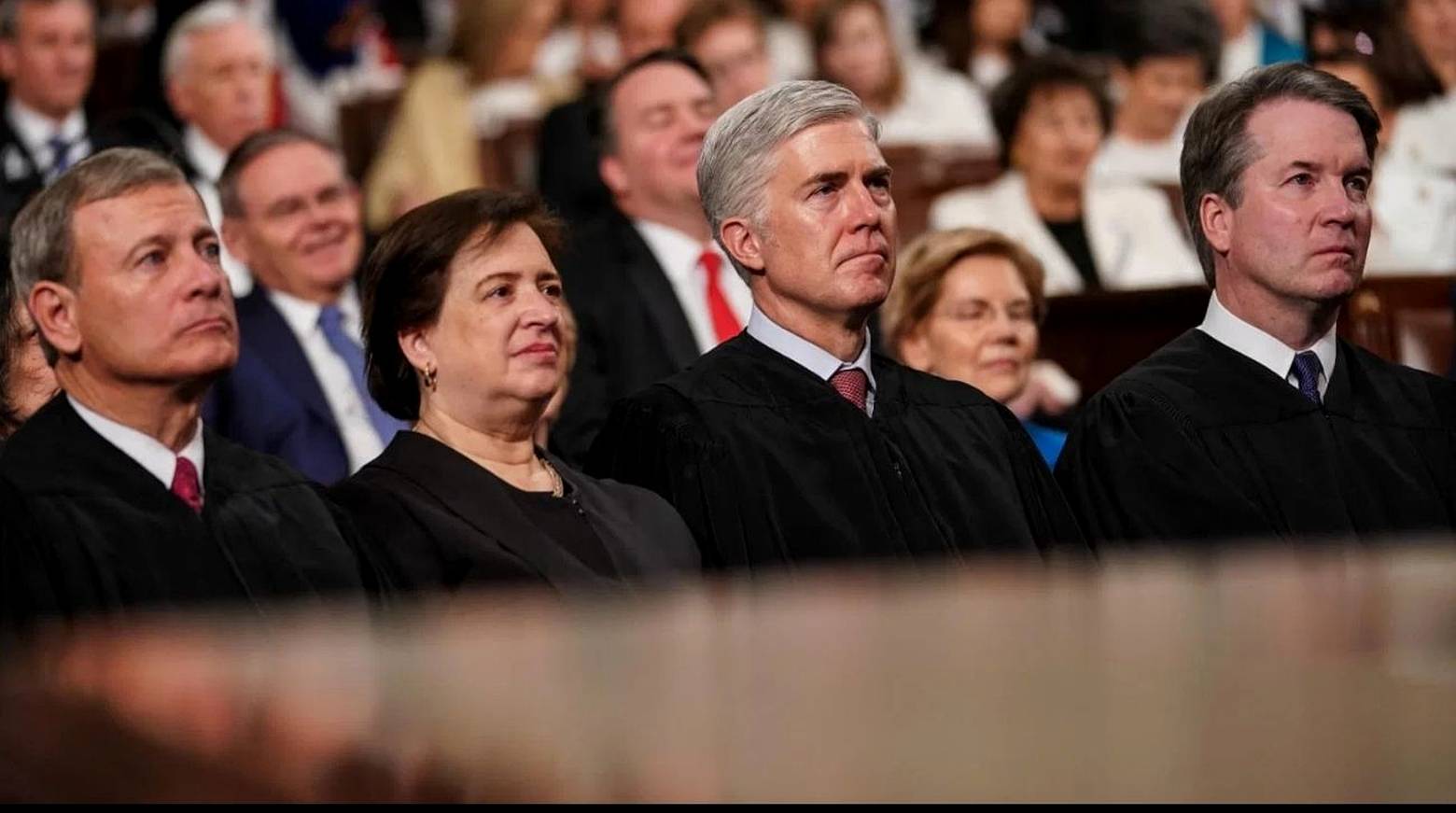
The emergency appeal was filed shortly before early voting was scheduled to begin. Justice Brett Kavanaugh requested a response but did not block the start of voting.
Kavanaugh later referred the application to the full court. The court denied Ronan’s request in a brief order without explanation.