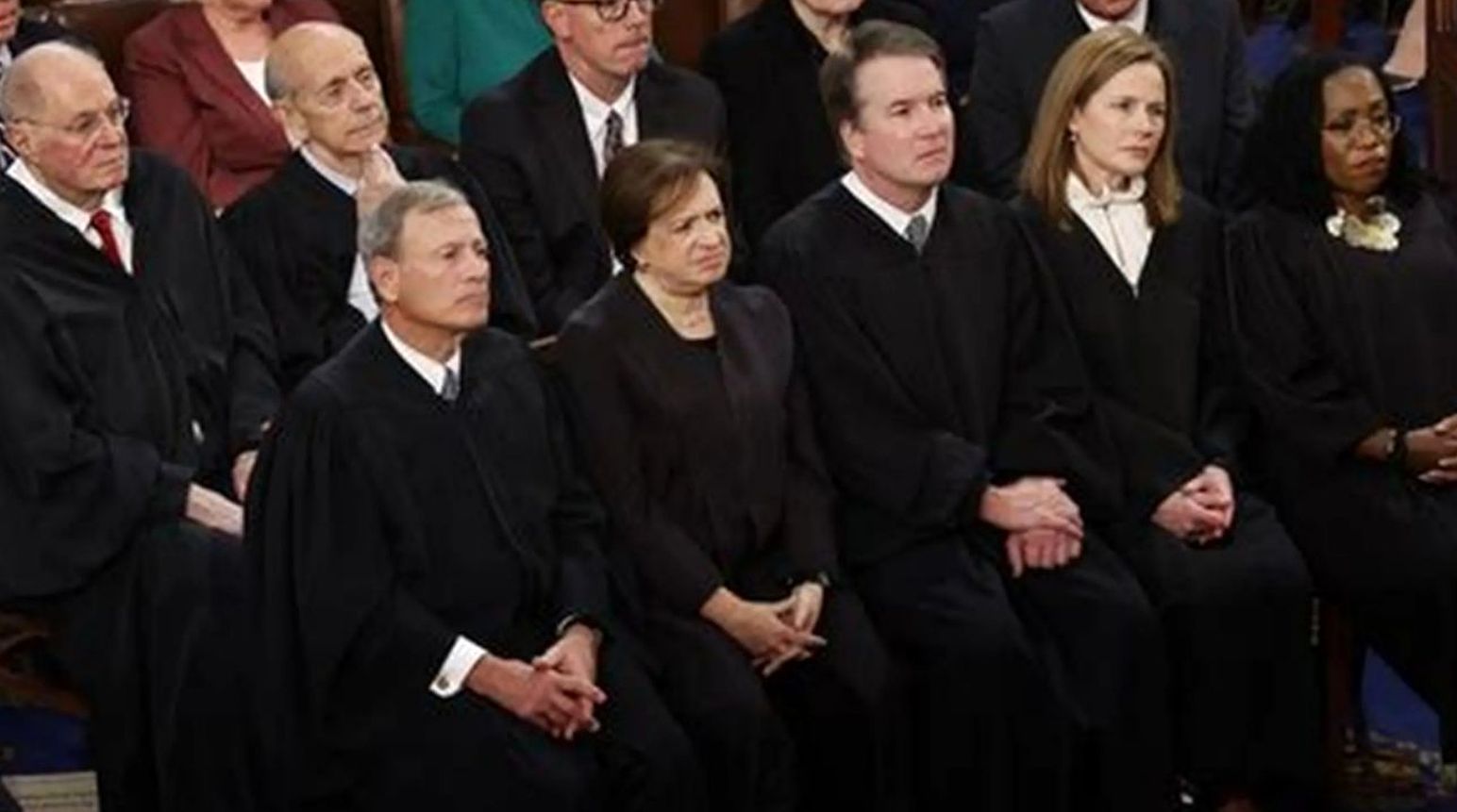
Supreme Court Justice Sonia Sotomayor publicly criticized fellow Justice Brett Kavanaugh during a recent event, suggesting his background may influence how he views immigration enforcement policies and their real-world impact
Supreme Court Justice Sonia Sotomayor publicly criticized fellow Justice Brett Kavanaugh during a recent event
Supreme Court Justice Sonia Sotomayor publicly criticized fellow Justice Brett Kavanaugh during a recent event, suggesting his background may influence how he views immigration enforcement policies and their real-world impact.
Speaking at the University of Kansas School of Law, Sotomayor took aim at a concurring opinion authored by Kavanaugh in a case involving immigration enforcement actions carried out by federal authorities. The case addressed the scope of enforcement operations conducted by Immigration and Customs Enforcement (ICE), including brief stops and detentions.
Referring to Kavanaugh’s characterization of such stops as “typically brief,” Sotomayor argued that the real-world consequences of even short detentions can be significant—particularly for hourly workers who may lose income as a result.
“I had a colleague in that case who wrote, you know, these are only temporary stops,” Sotomayor said. She then added that the perspective reflected someone whose background may not include familiarity with workers paid by the hour, suggesting that life experience shapes how justices interpret legal issues.
Sotomayor emphasized that even brief interactions with law enforcement can have tangible economic consequences. “Those hours that they took you away, nobody’s paying that person,” she said, arguing that lost wages could directly affect a family’s ability to meet basic needs.
Her remarks were widely interpreted as a critique of Kavanaugh’s upbringing and professional background. Kavanaugh attended elite preparatory schools and has spent much of his career in government and legal institutions, a trajectory that Sotomayor implied may differ from the lived experiences of lower-income or hourly wage workers.
The comments reflect a broader philosophical divide on the court over immigration enforcement and civil
The comments reflect a broader philosophical divide on the court over immigration enforcement and civil liberties. Kavanaugh has argued that immigration stops based on reasonable suspicion have long been part of U.S. enforcement policy across multiple administrations, framing them as a lawful and established tool.
Sotomayor, along with other members of the court’s liberal wing, has taken a more critical view. In prior dissents, she has raised concerns about the potential for such enforcement practices to disproportionately affect certain communities, particularly individuals perceived to be immigrants based on language or occupation.
“We should not have to live in a country where the government can seize anyone who looks Latino, speaks Spanish, and appears to work a low-wage job,” she wrote in a previous dissent related to the case.
The public nature of Sotomayor’s remarks has drawn attention because Supreme Court justices traditionally avoid direct personal criticism of one another, especially outside formal opinions. Legal observers note that while sharp disagreements are common in written rulings, public comments targeting a colleague’s background are relatively rare.
Legal scholar Jonathan Turley criticized the remarks, describing them as a departure from the court’s tradition of collegiality. He argued that the comments amounted to a personal critique rather than a substantive legal disagreement and raised concerns about the tone of public discourse among justices.
Turley also noted that both justices have elite educational backgrounds, pointing out that Sotomayor herself
Turley also noted that both justices have elite educational backgrounds, pointing out that Sotomayor herself attended Princeton University and Yale Law School. He suggested that differences in judicial philosophy are better explained by legal interpretation rather than personal background alone.
“I have long criticized the growing number of public statements by justices on controversial subjects and cases, including Justice Sotomayor. However, this appearance represented a new low in lashing out at a colleague as effectively blinded by his own privilege,” he wrote.
Despite the criticism, Sotomayor framed her comments as reflecting the importance of diverse life experiences on the bench. She argued that judges bring different perspectives shaped by their backgrounds, which can influence how they understand the impact of laws on various communities.
“Life experiences teach you to think more broadly and to see things others may not,” she said during the event.
The exchange highlights the ongoing ideological divide within the Supreme Court, particularly on issues related to immigration, law enforcement, and individual rights.