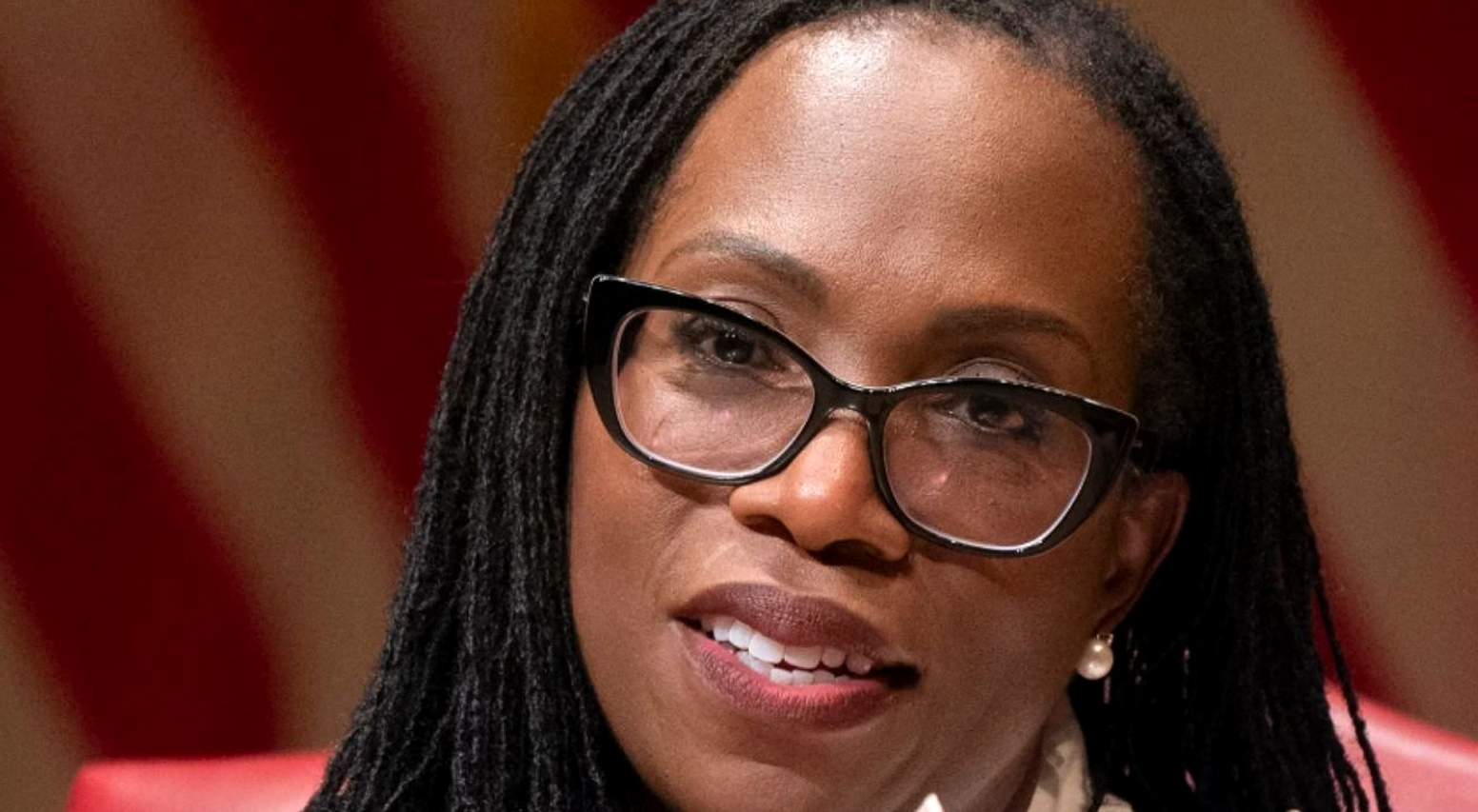
Justice Ketanji Brown Jackson criticized the Supreme Court majority on Monday, accusing them of allegedly overstepping the high court’s role in reviewing a lower court decision in a Fourth Amendment case involving whether a police officer had reasonable suspicion to stop a man
Justice Ketanji Brown Jackson criticized the Supreme Court majority on Monday, accusing them of allegedly
Justice Ketanji Brown Jackson criticized the Supreme Court majority on Monday, accusing them of allegedly overstepping the high court’s role in reviewing a lower court decision in a Fourth Amendment case involving whether a police officer had reasonable suspicion to stop a man.
Jackson, appointed by former President Joe Biden, was the only justice to fully defend the ruling by a Washington, D.C. appeals court, which had concluded that the stop was improper. The Supreme Court overturned that decision in a 7–2 ruling, finding the stop was justified. Justice Sonia Sotomayor also disagreed with the majority but notably did not join Jackson’s dissent.
In its opinion, the Court said police may rely on the “totality of the circumstances” when determining reasonable suspicion in the Fourth Amendment case, explaining that individual factors that may appear insignificant on their own can, when combined, justify a stop or arrest.
Advertisement
Jackson contended that the high court was improperly intervening in a lower court’s routine evaluation of relevant and irrelevant facts. “I cannot fathom why that kind of factbound determination warranted correction by this Court,” Jackson wrote.
reporting a suspicious vehicle
The case stemmed from a 2023 dispatch call to Washington, D.C., police around 2 a.m. reporting a suspicious vehicle. When an officer arrived, two individuals fled from the car, while a third person began slowly backing out of the parking lot with a door still open. The D.C. attorney general’s office argued that the totality of those circumstances provided reasonable suspicion to justify the stop.
In an unsigned per curiam opinion, the Supreme Court of the United States said the lower court failed to properly consider the fact that two individuals had fled the vehicle before the stop occurred.
Jackson, in dissent, said the D.C. appeals court had done a basic “culling” of the information and narrowed the relevant facts in determining that the stop was not justified.
“Under these circumstances, with only seconds to decide whether to intervene, the officer was entirely justified in detaining the driver,” lawyers for the police argued. They added that “within moments of stopping the driver, the officer observed a smashed window and punched-out ignition, confirming that the vehicle had been stolen.”
Although Jackson is known for advocating court intervention in broader constitutional battles over presidential power, her dissent in this case highlighted the importance of judicial restraint.
Jackson claimed in her lone dissent that the lower court properly considered the Fourth Amendment
Jackson claimed in her lone dissent that the lower court properly considered the Fourth Amendment, which says people have a right to be “secure in their persons, houses, papers, and effects, against unreasonable searches and seizures.” She said the case was not worthy of taking the “unusual step of summary reversal.”
“I am not sure why our Court sees fit to intervene in this case, let alone to do so summarily,” Jackson said. “If the intervention reflects a worry that the District of Columbia Court of Appeals (DCCA) misunderstands the Fourth Amendment’s totality-of-the-circumstances analysis, that worry seems unfounded.”
Meanwhile, a new report detailing leaked internal communications from the Supreme Court of the United States is raising fresh concerns about confidentiality, internal divisions, and the long-term credibility of the institution.
The latest controversy centers on internal memos obtained and published by The New York Times, which reveal private deliberations among justices regarding the court’s use of the so-called “shadow docket”—a mechanism that allows the court to issue rulings without full briefing or oral argument.
Legal analyst Jonathan Turley described the leak as part of a broader pattern that could signal deeper institutional problems within the court. According to Turley and others, the recurrence of leaks suggests that the issue may go beyond a single incident and instead reflect shifting norms or tensions within the court itself.