which reflects the author’s opinion.
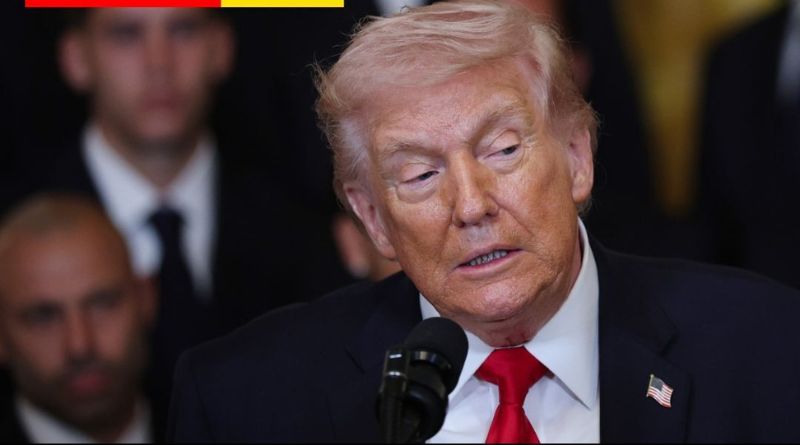
President Donald Trump took a jab at Britain on Saturday, labeling the country a “once great ally” while voicing his frustrations with the left-wing Labour government in London for its initial refusal to permit the U.S. to use its bases in the conflict in Iran.
The so-called “special relationship” between the United Kingdom and the United States has suffered significant strain, especially as Prime Minister Keir Starmer’s administration was outshone by France in terms of swift military responses. Reports said that Starmer’s government is gearing up to flex its muscles, with the aircraft carrier HMS Prince of Wales reportedly set to deploy to the Middle East.
However, Trump’s reaction has made it clear that he wasn’t unimpressed. He openly ridiculed Starmer for his belated response to the conflict, especially after initially resisting U.S. access to British bases for operations in Iran.
“The United Kingdom, our once Great Ally, maybe the Greatest of them all, is finally giving serious thought to sending two aircraft carriers to the Middle East. That’s OK, Prime Minister Starmer, we don’t need them any longer — But we will remember,” Trump wrote on Truth Social.
“We don’t need people that join Wars after we’ve already won!” he added.
Former British Prime Minister Liz Truss voiced agreement with Trump’s comments, calling them “justified and damning.”
Although Starmer initially opposed granting the U.S. access to British military bases, he later backtracked, permitting it but only for “defensive” actions. However, this change has done little to improve his relationship with the American leader.
Earlier this week, President Trump expressed his disappointment with Starmer in an interview with London’s Daily Telegraph. He pointed out that this situation might be the first instance in the history of UK-U.S. relations where a prime minister refused a military request from Washington.
Trump noted that Starmer, a former human rights lawyer, made his decision out of concern for the legality of the request. The President argued that the complexities of international law should not overshadow the responsibility to protect British citizens, many of whom have suffered from terrorist attacks supported by Iran.
Trump mocked Starmer even further during an Oval Office meeting with German Chancellor Olaf Scholz, saying of the UK leader: “This is not Winston Churchill that we’re dealing with.”
Initially, Starmer sought to distance himself from his left-wing party and align with the Trump administration. However, relations soured after Starmer decided to cede control of the strategically important Chagos Islands to Mauritius, an East African nation aligned with China, following a ruling from the International Court of Justice at the United Nations.
Trump has criticized this decision, which jeopardizes the future of the UK-U.S. military base on Diego Garcia, calling it a “blight” on Britain’s reputation and accusing Starmer of succumbing to “wokeism.”
Meanwhile, White House Press Secretary Karoline Leavitt dismissed reports that Russia is supplying Iran with intelligence to target American forces in the Middle East during a press gaggle on Friday at the White House.
“It clearly is not making a difference with respect to the military operations in Iran because we are completely decimating them,” she told reporters Friday at the White House. “We are achieving the military objectives of this operation, and that is going to continue.”
Leavitt stated that Russia’s actions will not undermine President Trump’s efforts to secure peace and end Moscow’s war on Ukraine. She mentioned that Russia and Ukraine had agreed on a prisoner exchange on Thursday.
“I think the president would say that peace is still an achievable objective,” she said, adding that peace is something “this administration still wants to see.”
Russia has reportedly been sharing information with Iran regarding the locations of U.S. forces in the Middle East. This development indicates that a significant American adversary is becoming involved in the conflict, even if indirectly, according to a report from The Washington Post.