Officials announced a dozen new denaturalization cases Friday involving individuals from multiple countries.
Those cases include a Catholic priest from Colombia accused of sexually abusing a child, several men linked to al Qaeda and al-Shabaab, a gun trafficker, and a man from Cuba who became a U.S. ambassador while allegedly acting as a spy for his home country.
To revoke citizenship, the government must demonstrate that an individual concealed criminal conduct or misrepresented their identity in a way that would have disqualified them from obtaining citizenship in the first place, the Washington Times reported.
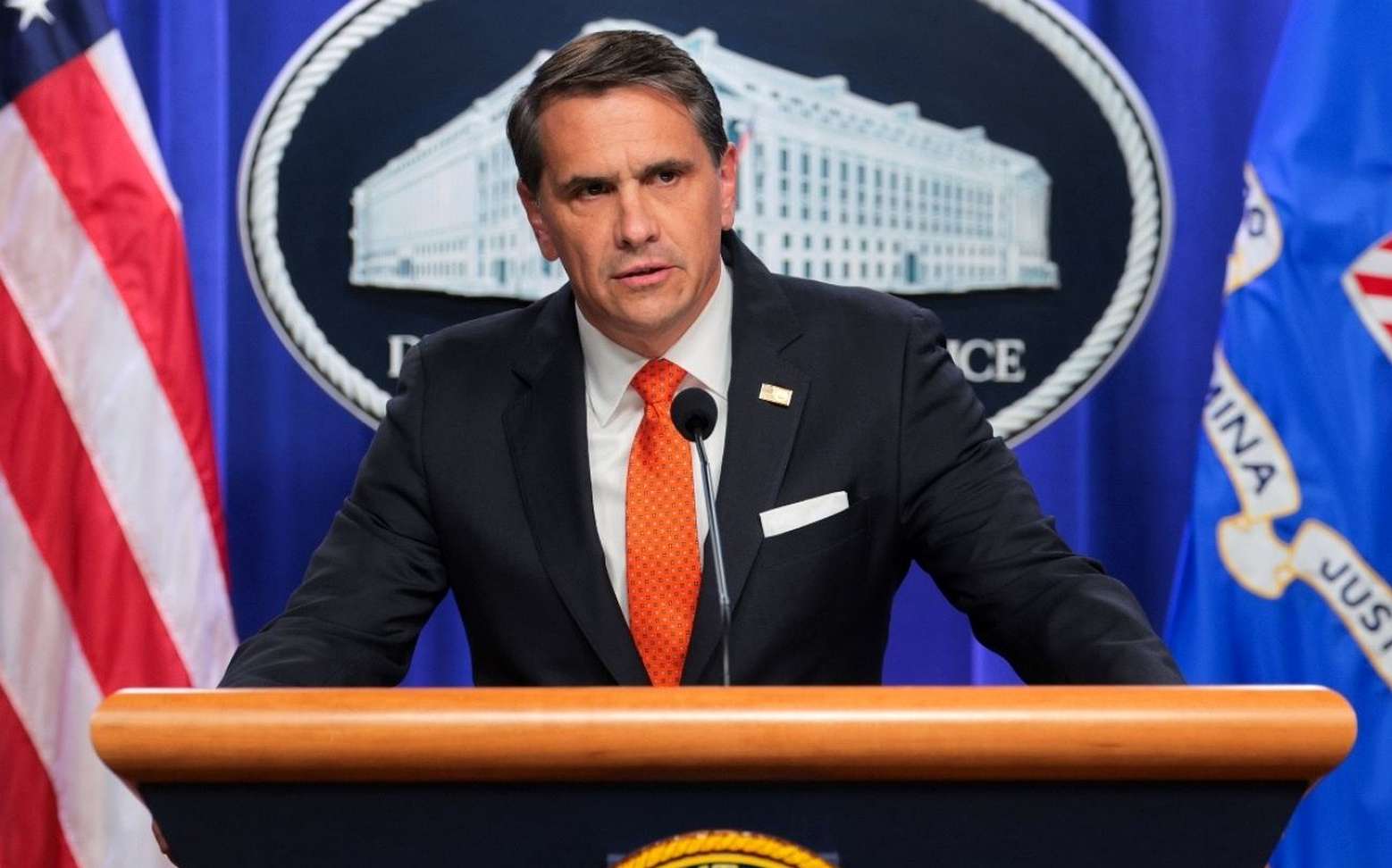
Acting Attorney General Todd Blanche indicated in a CBS interview on Wednesday that many individuals who obtained citizenship should have been prevented from doing so.
“If you’re going to come and become a citizen in this country, but you’re going to do it by fraud, you’re going to do it in a way that’s illegal, you should be worried,” Blanche told the network.
Between 1990 and 2017, the U.S. had fewer than twelve cases filed each year, often involving notorious individuals such as Nazis or those associated with war crimes in Bosnia or Chile, the Times reported.
The number of denaturalization cases rose to about 42 per year during the first Trump administration before dropping to roughly 16 annually under President Joe Biden, according to data compiled by Irina Manta.
Officials say several of the newly filed cases involve particularly serious allegations. Victor Manuel Rocha, a native of Colombia, is accused of acting as a spy for Cuba’s intelligence services dating back to 1973. He later became a naturalized U.S. citizen in 1978 and went on to serve as head of inter-American affairs at the National Security Council in the 1990s — where he oversaw policy involving Cuba — before being appointed U.S. ambassador to Bolivia under George W. Bush.
Rocha, 75, is currently serving a 15-year prison sentence following his conviction and is not expected to be released for another decade. However, Jason A. Reding Quinones, the U.S. attorney in southern Florida, said that punishment alone is not sufficient.
“This civil denaturalization case is about finishing the job,” he told the Times. “A person who secretly serves communist Cuba should not keep the privilege of United States citizenship, even while in prison.”
Khalid Ouazzani, a 48-year-old native of Morocco, became a naturalized U.S. citizen in 2006 and took the standard oath of allegiance, even as authorities say he was already working with al Qaeda, including assisting in a plot to bomb the New York Stock Exchange.
Federal officials argue that conduct demonstrates he misrepresented his allegiance to the Constitution during the naturalization process.
Baboucarr Mboob, 58, from The Gambia, is accused of participating in the extrajudicial execution of fellow military officers, an act considered a war crime. Authorities say he concealed that involvement when he became a U.S. citizen in 2011 but later acknowledged it during testimony before his country’s reconciliation commission.
Oscar Alberto Pelaez, 75, from Colombia, served as a priest in California when he sexually abused multiple children between 1998 and 2000, according to officials. Prosecutors say he then provided false information during his naturalization process, stating in 1999 and 2001 that he had no undisclosed criminal history.
The DOJ said that alleged concealment, along with a lack of “good moral character,” would have disqualified him from obtaining U.S. citizenship had it been known at the time, per the Times.
Adeyeye Ariyo Akambi, 65, from Nigeria, was deported from the U.S. in 2000 but returned under a different identity and eventually obtained U.S. citizenship using that false name.
“The disturbing criminal histories confirm these individuals should have never received the privilege of U.S. citizenship,” said Assistant Attorney General Brett Shumate, the Times reported.