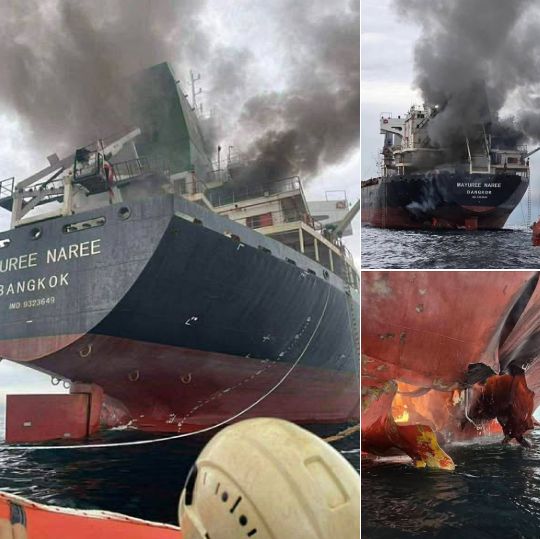
Tensions rose after the Strait of Hormuz ship attack targeted commercial vessels crossing the vital waterway. The incident alarmed governments, shipping companies, and global energy markets.
Iranian officials earlier warned ships linked to the United States or Israel. They said such vessels could become targets without permission to transit the strait.
Strait of Hormuz Ship Attack Damages Commercial Vessels
Maritime monitors reported that projectiles struck multiple commercial ships during the Strait of Hormuz ship attack. A Thai-flagged bulk carrier caught fire in its engine room.
Crew members evacuated part of the ship after the fire. Two additional vessels from Japan and the Marshall Islands also suffered damage.
Strategic Importance of the Strait of Hormuz
Authorities reported no large-scale casualties after the Strait of Hormuz ship attack. Investigations into the incident remain ongoing.
The Strait of Hormuz connects the Persian Gulf to the Gulf of Oman. It carries about one-fifth of global oil supply.
Shipping Disruptions After Strait of Hormuz Ship Attack
Major energy exporters rely on this corridor for international shipments. These producers include Saudi Arabia, the UAE, Kuwait, and Iraq.
Shipping groups now advise vessels to move with extreme caution. Some ships slowed down, anchored, or reversed course.
Global Concerns Over Strait of Hormuz Ship Attack
Insurers now classify the Gulf region as high risk for ships. Higher insurance costs may affect commercial shipping routes.
International leaders urge all sides to protect civilian vessels. They warn the Strait of Hormuz ship attack threatens global trade stability.