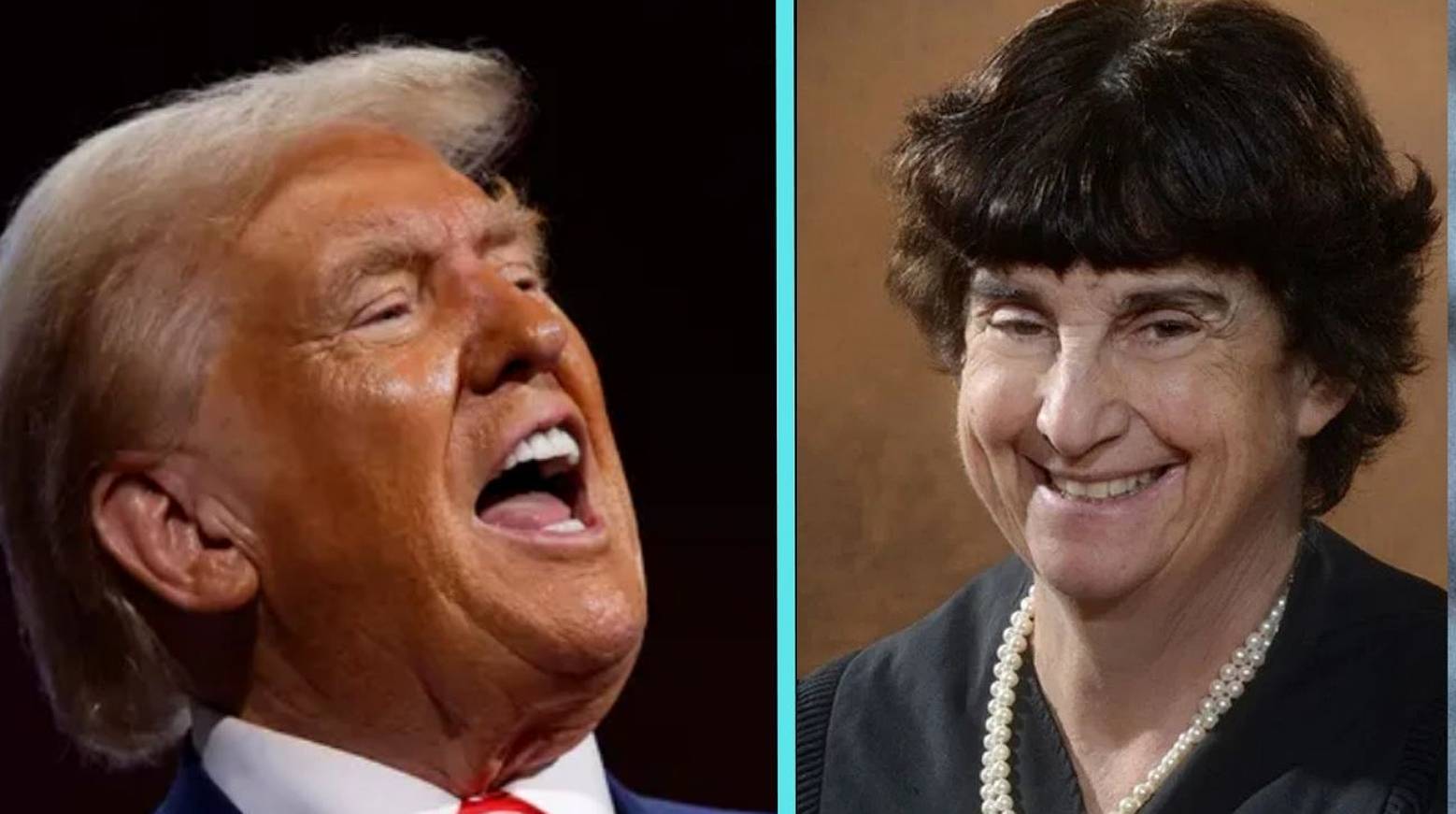
A federal judge has blocked the Trump administration from ending Temporary Protected Status (TPS) for thousands of Ethiopian nationals, marking another legal clash over immigration policy and executive authority
A federal judge has blocked the Trump administration from ending Temporary Protected Status (TPS) for
A federal judge has blocked the Trump administration from ending Temporary Protected Status (TPS) for thousands of Ethiopian nationals, marking another legal clash over immigration policy and executive authority.
U.S. District Judge Murphy ruled that President Donald J. Trump’s administration could not move forward with terminating the program, finding that the process used to revoke protections likely violated federal law. The decision delays the effective end of TPS for more than 5,000 Ethiopians currently living and working in the United States.
The Department of Homeland Security administers Temporary Protected Status. It allows individuals from designated countries experiencing armed conflict, disaster, or extraordinary conditions to remain in the U.S. temporarily. Ethiopia was initially granted TPS designation in 2022, with protections later extended through early 2026.
The Trump administration moved to terminate that designation shortly after taking office in January 2025, arguing that conditions in Ethiopia no longer met the legal threshold required to justify continued protection. DHS officials said the decision followed a formal review of country conditions and consultation with other federal agencies.
However, Judge Murphy determined that the administration’s actions likely failed to meet procedural requirements under federal law, including standards set by the Administrative Procedure Act. He ordered a delay in the termination, effectively allowing the protections to remain in place while the case proceeds through the courts.
This is not the first time the administration’s TPS decisions have faced judicial pushback
This is not the first time the administration’s TPS decisions have faced judicial pushback. Earlier in 2026, the same judge issued a temporary restraining order preventing the immediate termination of protections for Ethiopian nationals. The latest ruling extends that pause and signals the court’s continued skepticism regarding the implementation of the policy change.
The case is part of a broader legal battle over the scope of executive authority in immigration policy. Federal law—specifically provisions within the Immigration and Nationality Act—grants the Secretary of Homeland Security significant discretion to designate, extend, or terminate TPS based on conditions in a given country.
However, courts have consistently intervened to assess the legality of those decisions. Judges have blocked TPS terminations in multiple cases, often citing concerns that the administration’s actions were arbitrary, insufficiently justified, or procedurally flawed.
At the same time, the Supreme Court of the United States has occasionally sided with the administration in related disputes. In several instances, the Court has issued emergency stays allowing TPS terminations to proceed while litigation continues, underscoring the unsettled legal landscape surrounding the program.
The Department of Homeland Security criticized the ruling, calling it another example of lower courts interfering with executive authority. Officials noted that the administration has previously secured favorable outcomes at the Supreme Court level and suggested that further appeals are likely.
Legal analysts say the repeated court interventions reflect an ongoing tension between the executive branch’s
Legal analysts say the repeated court interventions reflect an ongoing tension between the executive branch’s authority over immigration and the judiciary’s role in ensuring that policy changes comply with statutory and constitutional requirements.
The stakes are significant for those directly affected. TPS recipients are typically allowed to work legally in the United States and are protected from deportation while the designation is in effect. For Ethiopian nationals covered by the program, the ruling provides temporary relief but leaves long-term uncertainty unresolved.
The case also fits into a larger pattern of litigation surrounding immigration policy under both Democratic and Republican administrations. Decisions affecting TPS designations for countries such as Haiti, Venezuela, Syria, and several Central American nations have similarly been challenged in court, often resulting in temporary blocks or delays.
Looking ahead, the Trump administration is expected to continue pursuing its effort to scale back TPS designations, while legal challenges are likely to persist. The Supreme Court is also poised to hear additional cases involving TPS for other countries, which could further clarify the limits of executive authority in this area.
For now, Judge Murphy’s ruling ensures that TPS protections for Ethiopian nationals remain in place—at least temporarily—highlighting the ongoing legal battles shaping U.S. immigration policy.