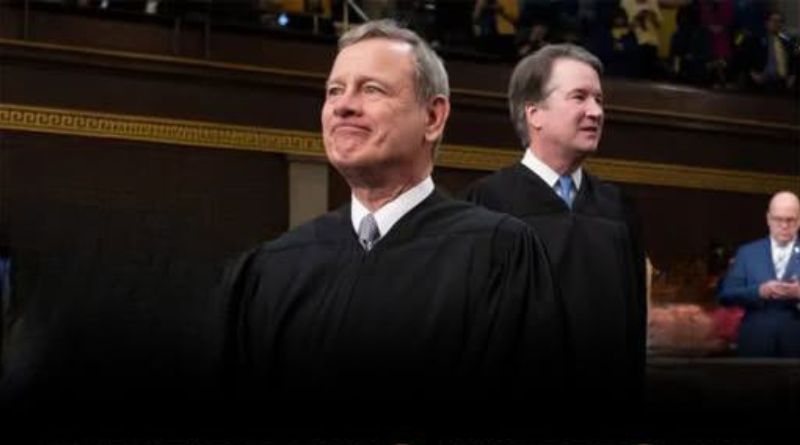
The Supreme Court of the United States has issued a major ruling that affects how federal courts review disability claims filed by veterans. In Bufkin v. Collins, the Court ruled 7–2 that appellate courts are not required to independently reevaluate how the U.S. Department of Veterans Affairs applies the “benefit-of-the-doubt” rule when assessing disability claims. The decision could significantly influence how veterans’ appeals are handled throughout the federal court system.
The benefit-of-the-doubt rule is a central part of the VA’s disability evaluation process. Under this standard, if the evidence supporting and opposing a veteran’s claim is roughly equal, the decision should favor the veteran. The rule was designed to help service members who may struggle to prove that a medical condition is connected to their military service, often due to incomplete or unclear records from their time in uniform.
The case before the Court involved two veterans, Joshua Bufkin and Norman Thornton, whose disability claims included complicated medical evidence. Bufkin, a former Air Force service member, sought benefits for Post-traumatic Stress Disorder but encountered conflicting medical opinions. Thornton, an Army veteran who served during the Gulf War, pursued a higher disability rating for PTSD but also faced mixed medical evaluations.
Despite evidence that appeared closely balanced in both cases, the VA denied their claims. Those decisions were later upheld by the United States Court of Appeals for Veterans Claims and a federal appeals court without independently reconsidering whether the benefit-of-the-doubt standard had been properly applied.
Writing for the majority, Justice Clarence Thomas explained that appellate courts should generally defer to the VA’s findings on factual and medical issues unless there is a clear error. While courts must review legal questions independently, factual determinations—including how the benefit-of-the-doubt rule is applied—are subject to a more limited review. As a result, veterans appealing VA decisions may now face a higher hurdle, needing to demonstrate that the agency made a clear mistake rather than simply arguing that the evidence was evenly balanced.