This article may include commentary that reflects the author’s opinion.
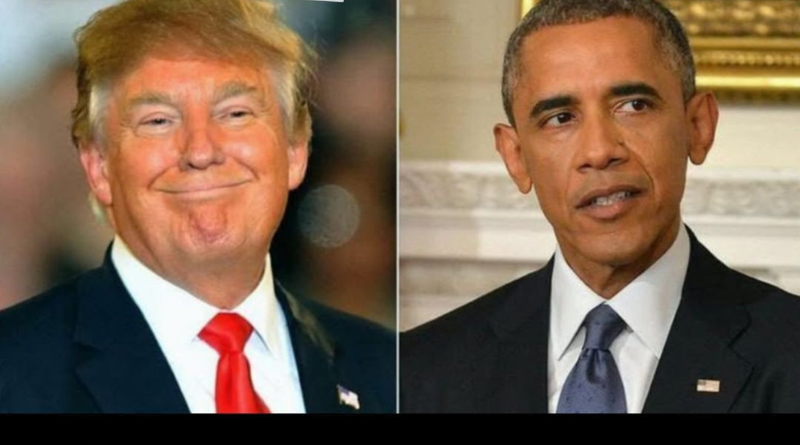
President Donald Trump has revoked the Obama administration’s 2009 “Endangerment Finding,” a policy that served as the legal basis for federal regulation of greenhouse gas emissions for more than 16 years. The White House described the Environmental Protection Agency’s announcement as the largest deregulatory action in U.S. history.
The U.S. Environmental Protection Agency (EPA) said in a formal statement that the rule “eliminates both the Obama-era 2009 Greenhouse Gas (GHG) Endangerment Finding and all subsequent federal GHG emission standards for vehicles and engines covering model years 2012 through 2027 and beyond.”
“For sixteen years, the Endangerment Finding has been the source of consumer choice restrictions and trillions of dollars in hidden costs for Americans,” said EPA Administrator Lee Zeldin. “The Trump EPA is strictly following the letter of the law, restoring common sense to policy, expanding consumer choice, and supporting the American Dream.”
Trump announced the repeal in the Roosevelt Room alongside Zeldin, calling the decision “the single largest deregulatory action in U.S. history.”
“Under the process just completed by the EPA, we are officially terminating the so-called Endangerment Finding,” Trump said. “It was a disastrous Obama-era policy that severely harmed the American auto industry and significantly increased costs for consumers. It had no basis in law.”
The 2009 Endangerment Finding was established during the administration of Barack Obama under then–EPA Administrator Lisa Jackson. It concluded that carbon dioxide and five other greenhouse gases posed a risk to public health and welfare, forming the legal foundation for federal climate regulations affecting vehicles, power plants, and major industries.
Trump said the repeal was intended to correct what he described as regulatory overreach.
“The Endangerment Finding was used to justify more than a trillion dollars in regulations, none of which were authorized by Congress,” the president said. “We are ending government overreach that hurt jobs, families, and our economy.”
EPA officials said the change could save Americans more than $1.3 trillion by eliminating regulatory mandates associated with the greenhouse gas program and compliance credit systems, including the “start-stop” feature installed in many vehicles.
“As an added bonus, we are eliminating the widely disliked start-stop feature—the Obama switch that made cars shut off at red lights in the name of climate virtue-signaling,” Zeldin said.
The agency emphasized that the repeal applies only to greenhouse gas emissions and does not affect existing federal standards for traditional pollutants such as sulfur dioxide or nitrogen oxides.
“The agency believes the 2009 Endangerment Finding exceeded the EPA’s statutory authority under the Clean Air Act,” the final rule stated. “A policy decision of this scale, with sweeping economic and policy implications, belongs with Congress.”
Zeldin said the decision was informed by recent Supreme Court rulings, including West Virginia v. EPA and Loper Bright Enterprises v. Raimondo, which limited the regulatory authority of federal agencies.
“We reviewed the Clean Air Act and considered what the highest court in the country has said,” Zeldin explained. “Our guiding principle was simple: if Congress did not authorize it, the EPA should not be doing it.”
The original finding was influenced by the Supreme Court’s 2007 decision in Massachusetts v. EPA, which determined that greenhouse gases could be regulated as air pollutants if the agency found they endangered public health or welfare. The Obama-era EPA made that determination soon afterward, using it to support broad environmental regulations.
Trump’s move effectively reverses that approach, returning the EPA to a narrower interpretation of its regulatory authority.
“We are following the law as Congress wrote it, not as activists wish it to be,” Zeldin said.
Several conservative legal organizations and energy groups welcomed the decision. The Pacific Legal Foundation said the 2009 finding “triggered a trillion-dollar regulatory cascade that Congress never authorized,” adding that the repeal “reaffirms the principle that decisions of this magnitude require clear congressional approval, not bureaucratic interpretation.”
Zeldin concluded the announcement by highlighting the administration’s broader energy agenda.
“The Endangerment Finding was the ‘Holy Grail’ of the climate change movement,” he said. “Today, that era is over. The Trump EPA is restoring energy independence, consumer freedom, and the rule of law for the American people.”