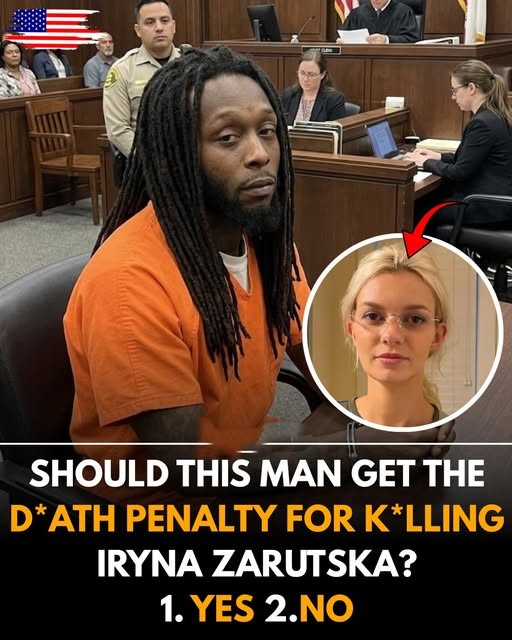
A Quest for True Accountability The case against Decarlos Brown Jr. has sparked a fundamental conversation about whether any punishment short of the death penalty can truly address such a profound loss of innocent life
The Federal Stand: The U.S
A Quest for True Accountability The case against Decarlos Brown Jr. has sparked a fundamental conversation about whether any punishment short of the death penalty can truly address such a profound loss of innocent life. The Federal Stand: The U.S. Department of Justice, led by Attorney General Pam Bondi, has officially moved to seek the death penalty under federal law (18 U.S.C. § 1992), citing the “unforgivable” nature of the violence committed on a mass transportation system. “Iryna’s Law”: In response to the tragedy, North Carolina passed House Bill 307, known as “Iryna’s Law.” This legislation not only restricts the “cashless bail” policies that critics say allowed a repeat offender to remain on the streets but also specifically seeks to clear judicial roadblocks and resume capital punishment in the state. The Deterrence Argument: Supporters of the maximum penalty argue that for crimes of this magnitude, the death penalty is the only outcome that honors the victim’s life and sends an unmistakable message of zero tolerance. They view life without parole as a compromise that fails to provide the “ultimate accountability” demanded by tens of millions of citizens. Perspectives on Justice While the demand for the death penalty is vocal and widespread, the conversation also explores other forms of severe retribution and systemic reform: Life Without Parole: Some legal experts argue that a mandatory sentence of life in a maximum-security prison, without the possibility of ever seeing the light of day, provides a different kind of “living” accountability. Systemic Reform as Justice: For many, true accountability also means addressing the failures that led to the attack. This includes ending “soft-on-crime” judicial practices and fixing the broken mental health and involuntary commitment systems that allowed a violent, diagnosed schizophrenic with 14 prior arrests to remain unmonitored in public spaces. The 77 million voices calling for justice are not just asking for a sentence; they are demanding a return to a society where the law prioritizes the safety of the innocent over the “rights” of repeat offenders.