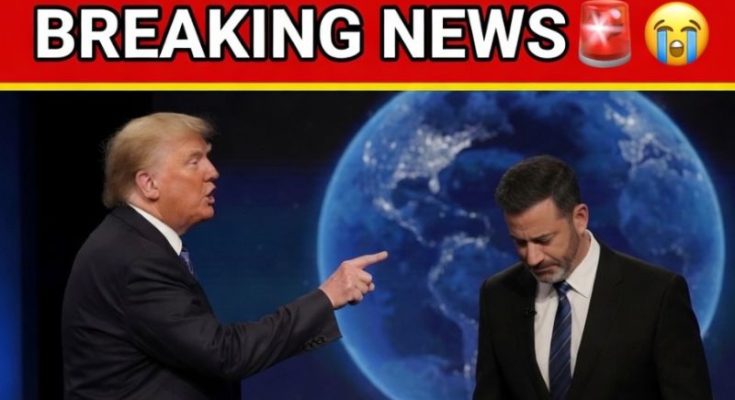
Trump responded with fury, framing the comment as part of a culture that treats violence against him as entertainment. Melania Trump, usually guarded in public, spoke openly about fear and the emotional toll the assassination attempt placed on their family. Their reaction transformed the controversy from a media feud into something far more personal and emotionally charged.
Kimmel, meanwhile, refused to fully retreat. On-air, he admitted the timing looked awful in hindsight, but argued the joke had never been about wishing death on anyone. He said his criticism has always targeted power, political behavior, and America’s relationship with violence—not violence itself. He also pushed back hard against demands that he be fired or silenced, arguing that Trump himself has spent years using insults, ridicule, and inflammatory rhetoric as political weapons.
That defense satisfied some viewers and enraged others. Critics argued that public figures in entertainment help shape a culture where hostility becomes normalized. Supporters countered that satire is supposed to provoke discomfort and that blaming comedians for violent acts creates a dangerous standard for speech.
What remained after the outrage faded slightly was a deeper discomfort that neither side could fully dismiss. Americans increasingly struggle to separate performance from threat, satire from malice, and rhetoric from real-world consequences. In a country already exhausted by political hostility, the collision between a comedian’s joke and an attempted assassination exposed how fragile those boundaries have become.
The lasting question is not simply whether Kimmel crossed a line. It is whether the national conversation itself has become so combustible that every insult, joke, speech, or headline now risks sounding less like commentary—and more like a warning.