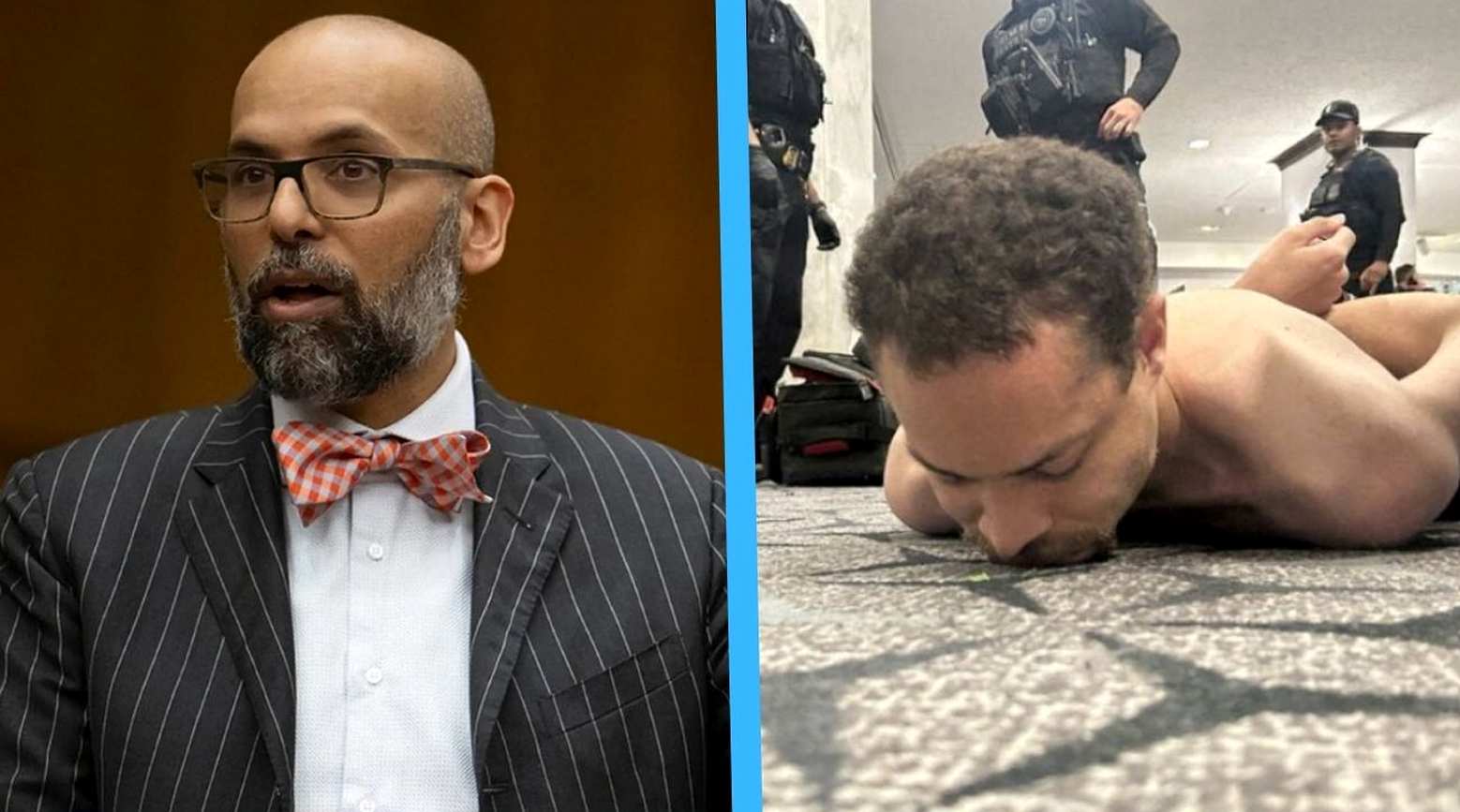
During a hearing Monday, Zia Faruqui addressed defendant Cole Allen directly, saying the court has a responsibility to ensure that individuals held before trial are treated in a manner that is both safe and consistent with the law.
Faruqui said he did not believe that standard had been met in Allen’s case.
“It’s the court’s job when recommending detention to ensure it’s done in a responsible and safe way,” Faruqui said, adding that he did not think that had happened here. He went further, offering an apology to Allen for the conditions he has faced while in custody.
Allen is accused of attempting violence at the White House Correspondents’ Dinner, a major annual event attended by political leaders, journalists, and administration officials. The case has drawn significant attention due to the nature of the allegations and the heightened security concerns surrounding the incident.
But Monday’s hearing focused less on the charges themselves and more on how Allen has been treated since his arrest.
According to details discussed in court, Allen has been held under extremely restrictive conditions inside the Washington, D.C., jail system. Those conditions included placement in a padded cell under near-constant observation, with limited access to basic privileges such as phone calls, reading materials, and recreation.
Faruqui questioned whether those measures were justified, noting that they appeared to go beyond standard pretrial detention practices. He said the restrictions resembled punitive measures rather than precautions based on medical or safety assessments.
The judge emphasized that individuals held in pretrial detention are presumed innocent and must be treated accordingly, regardless of the severity of the allegations against them.
He also compared Allen’s treatment to that of defendants charged in connection with the January 6, 2021, Capitol riot, many of whom were accused of political violence but were housed under less restrictive conditions after initial legal challenges.
Faruqui said Allen appeared to be facing harsher conditions than those defendants, raising concerns about consistency and fairness within the detention system.
The D.C. jail is operated by local authorities, even though it houses federal detainees. During the hearing, officials from the D.C. Department of Corrections defended their handling of the case, saying the measures were intended to ensure Allen’s safety rather than punish him.
They pointed to statements Allen allegedly made at the time of his arrest indicating he did not expect to survive the incident, which they said may have contributed to decisions to place him under suicide watch.
However, Faruqui noted that medical professionals had not supported that assessment, and he questioned whether the restrictions were based on appropriate clinical evaluations.
He also raised broader concerns about how detainees are treated in high-profile cases, suggesting that Allen’s situation could reflect larger systemic issues.
“What happens with the hundreds or thousands of low-profile cases?” Faruqui asked during the hearing, indicating that the court’s concerns extend beyond a single defendant.
As part of his ruling, Faruqui ordered jail officials to provide an update on Allen’s status and to explain whether he would be moved to less restrictive conditions. He indicated that if the jail could not provide appropriate housing, alternative arrangements might need to be considered, potentially involving federal authorities.
The judge’s comments underscore the legal balance courts must strike in cases involving serious allegations. While public safety and security are key concerns, courts are also responsible for ensuring that defendants’ rights are protected throughout the legal process.
Allen’s case remains ongoing, and the charges against him have not yet been resolved. Monday’s hearing did not address the merits of those charges, focusing instead on the conditions of his detention and whether they meet constitutional and legal standards.
The issue is likely to remain under scrutiny as the case proceeds, particularly given the broader questions raised about detention practices in politically sensitive cases.
For now, Faruqui’s remarks serve as a clear signal that the court expects detention decisions to be grounded in established legal principles — and that deviations from those standards will face close review.