The latest example comes from the state of Missouri.
The Missouri Supreme Court on Thursday unanimously ruled that the state’s newly enacted Republican-backed congressional map cannot be used in the November midterm elections unless voters first approve it in a statewide referendum.
The decision represents a setback for Republicans in the broader national fight over congressional redistricting ahead of the midterms.
Missouri Republicans had hoped the new boundaries giving the party a 7-1 advantage over the current 6-2 Republican-Democrat split would improve the party’s chances of picking up an additional U.S. House seat as the GOP works to protect its narrow majority in Congress.
The court’s ruling means the proposed map will remain sidelined unless it receives approval from Missouri voters.
The court concluded that a referendum petition filed in December, after opponents submitted more than 300,000 signatures, prevented the new congressional districts from taking effect unless voters first approved them.
Republican Secretary of State Denny Hoskins later rejected the petition on primary Election Day last month, arguing that Missouri’s referendum process could not be used to challenge congressional redistricting.
A lower court in Cole County, where the capital of Jefferson City is located, initially agreed with Hoskins.
The state’s highest court, however, reversed that ruling, clearing the way for the referendum and blocking use of the new map unless voters approve it.
“The referendum petition was legal, sufficient, and timely, and the secretary incorrectly concluded otherwise,” the high court said in its ruling.
The measure with the new districts “did not go into effect and will not go into effect unless and until approved by the voters.”
For now, the congressional map adopted after the 2020 census “remains in full force and effect for the November 2026 general election,” the court said.
If voters approve the new map, it could then take effect for future elections, subject to any remaining legal challenges.
If voters reject it, the map would not take effect, and lawmakers would have to keep the current districts or pass a different redistricting plan.
Once regarded as a closely divided swing state, Missouri has moved sharply toward Republicans over the past two decades and is now considered reliably conservative in statewide and federal elections.
Missouri Attorney General Catherine Hanaway, a Republican, said she plans to immediately appeal the state Supreme Court’s ruling to the U.S. Supreme Court in an effort to revive the new congressional map.
“Never before in American history has a court overturned a congressional map after a primary and before a general election,” Hanaway said in a statement.
“This unprecedented decision clearly violates federal law and has thrust our state into a full‑fledged constitutional crisis,” she added.
“We are confident that the federal courts will not allow every Missouri voter to be disenfranchised, which is what today’s decision does,” Hanaway continued.
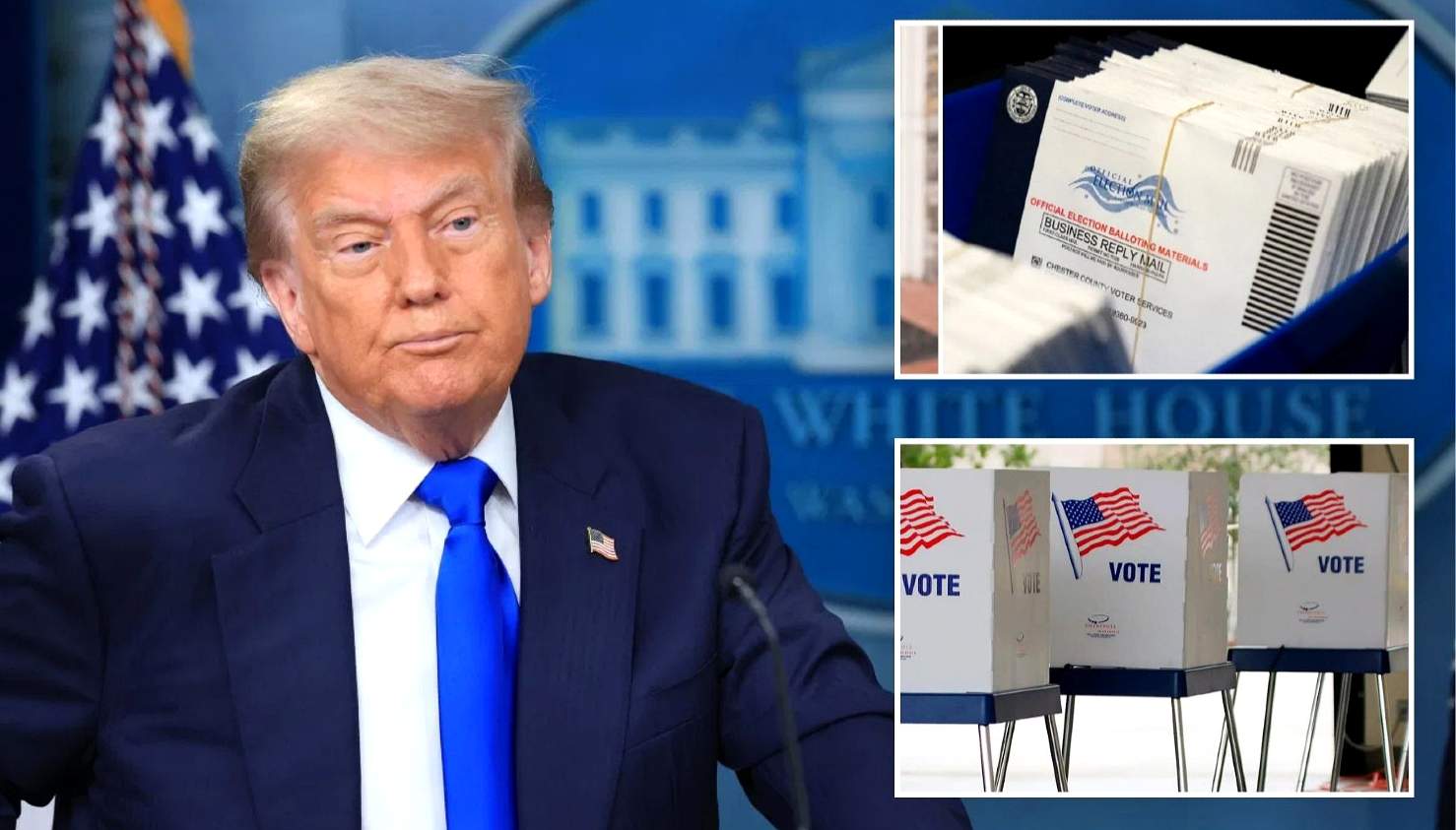
President Donald Trump sharply criticized Thursday’s ruling, calling the Missouri Supreme Court’s decision “ridiculous” and arguing that it was unconstitutional.
Trump also warned that the timing of the decision could create significant complications ahead of the November elections, saying there may not be enough time to redraw or otherwise resolve the congressional map before voters go to the polls.
“The Missouri Supreme Court just ridiculously ruled in favor of changing the maps back to what they were a long time ago,” he wrote on Truth Social.
“It’s called, Ancient History! The problem is, according to Legal Scholars, that not only was the ruling horrible, ridiculous, and unConstitutional, but there won’t be enough time to change the map back with the Election coming up in a very short period of time,” he noted further.
Republican Gov. Mike Kehoe said he is “extremely disappointed in today’s decision by unelected judges and their lack of respect for the legislative process.”