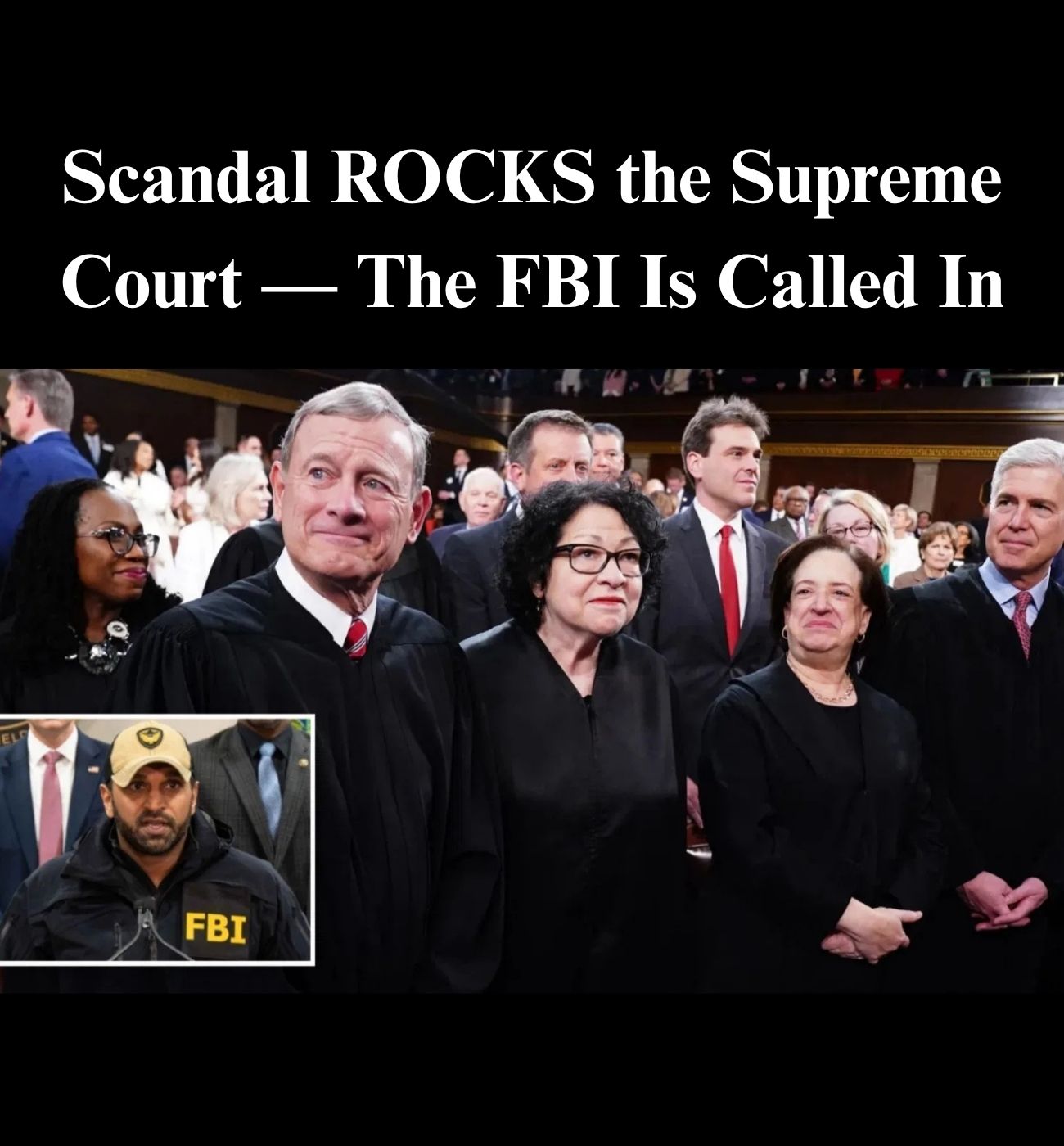
A new report detailing leaked internal communications from the Supreme Court of the United States is raising fresh concerns about confidentiality, internal divisions, and the long-term credibility of the institution
A new report detailing leaked internal communications from the Supreme Court of the United States
A new report detailing leaked internal communications from the Supreme Court of the United States is raising fresh concerns about confidentiality, internal divisions, and the long-term credibility of the institution.
The latest controversy centers on internal memos obtained and published by The New York Times, which reveal private deliberations among justices regarding the court’s use of the so-called “shadow docket”—a mechanism that allows the court to issue rulings without full briefing or oral argument.
Legal analyst Jonathan Turley described the leak as part of a broader pattern that could signal deeper institutional challenges within the court.
The disclosure comes just a few years after the unprecedented leak of the court’s draft opinion in the Dobbs case, which overturned Roe v. Wade. That earlier breach triggered an internal investigation that ultimately failed to identify the source, leaving lingering questions about the court’s ability to safeguard sensitive deliberations.
According to Turley and others, the recurrence of leaks suggests that the issue may go beyond a single incident and instead reflect shifting norms or tensions within the court itself.
“The court’s culture and institutional identity have always been its greatest protection of confidentiality,” Turley wrote, arguing that the recent leaks indicate that those internal safeguards may be eroding.
Chief Justice John Roberts has previously emphasized the importance of maintaining the court’s independence and
Chief Justice John Roberts has previously emphasized the importance of maintaining the court’s independence and integrity, often describing judges as neutral arbiters who apply the law rather than shape political outcomes. However, repeated leaks and increasingly public disagreements among justices have complicated that perception.
The latest reporting also comes amid heightened scrutiny of interactions between members of the court. In recent weeks, public remarks by Sonia Sotomayor criticizing colleague Brett Kavanaugh drew attention to internal tensions, though Sotomayor later walked back her comments.
Separately, reports tied to a forthcoming book have described heated exchanges between justices during past deliberations, further contributing to the perception of a more openly divided court.
While disagreements among justices are not unusual, they have historically remained private. The public exposure of internal dynamics—whether through speeches, books, or leaks—marks a departure from longstanding norms of discretion.
The “shadow docket” itself has become a focal point of debate. Critics argue that it allows major decisions to be made without the transparency of full hearings, while defenders say it is a necessary tool for handling urgent legal matters. The leaked memos reportedly show that justices themselves have expressed differing views on how and when it should be used.
Beyond the substance of the memos, however, the method of disclosure has become the central issue. Legal experts note that leaks from within the Supreme Court are particularly significant because the institution relies heavily on confidentiality to function effectively.
Unlike other branches of government, the court does not operate through public debate or political
Unlike other branches of government, the court does not operate through public debate or political negotiation. Its legitimacy depends in part on the perception that decisions are reached through careful, independent deliberation insulated from outside pressure.
The failure to identify the source of previous leaks has also fueled calls for stronger investigative measures. Some commentators have suggested that future inquiries could involve external agencies, though such steps would raise questions about separation of powers and the independence of the judiciary.
At the same time, others caution against overreaction, noting that the court has weathered internal disagreements and public criticism throughout its history. They argue that while leaks are serious, they do not necessarily indicate a fundamental breakdown of the institution.
Still, the cumulative effect of repeated disclosures, public criticism among justices, and growing political attention has placed the Supreme Court under an unusual level of scrutiny.
For Chief Justice Roberts and the court as a whole, the challenge moving forward will be balancing transparency with the need to preserve the confidentiality that underpins judicial decision-making.
Whether the court can restore confidence in its internal processes—or whether further leaks emerge—will likely shape public perceptions of the institution in the years ahead.