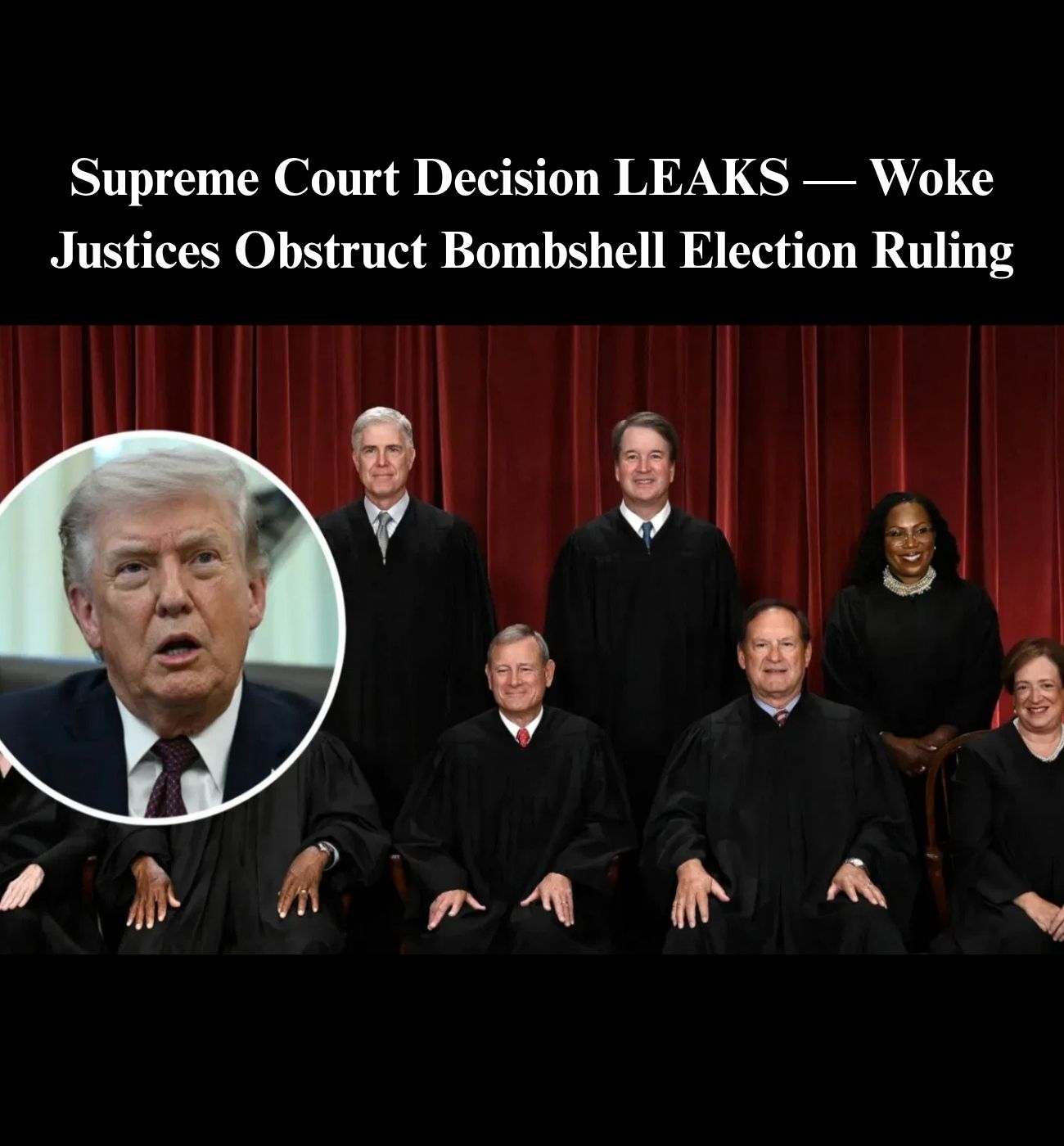
Speculation is mounting over a pending Supreme Court decision that could reshape federal elections, as the case Louisiana v. Callais is widely seen as one of the most consequential election law disputes in years.
At issue is whether parts of the Voting Rights Act (VRA)—specifically Section 2, which prohibits racial discrimination in voting—conflict with equal protections under the nation’s founding document. The case centers on Louisiana’s congressional map and whether the creation of a second majority-black district unconstitutionally prioritizes race in redistricting.
The Supreme Court has not yet issued its opinion, despite the case being fully argued, prompting growing speculation in legal and political circles about both the substance of the ruling and the reasons for the delay.
Former White House Press Secretary Sean Spicer added to that speculation this week, claiming that the decision may already be complete but is being held up internally. Speaking in a media interview, Spicer said he had been told the ruling is finished but that dissenting justices could be delaying its release.
I have been told by reliable sources that the decision is done and the minority is slow walking the dissent,” Spicer said, suggesting the delay could be strategic—potentially limiting the time states would have to redraw congressional maps ahead of upcoming elections
“I have been told by reliable sources that the decision is done and the minority is slow walking the dissent,” Spicer said, suggesting the delay could be strategic—potentially limiting the time states would have to redraw congressional maps ahead of upcoming elections.
Those claims have not been confirmed by the Court, which does not comment on internal deliberations. However, the timing of the decision is significant. If the Court issues a ruling that changes how Section 2 is applied—or strikes it down entirely—it could trigger a wave of redistricting across multiple states.
Legal analysts note that Callais has the potential to dramatically alter the enforcement of the Voting Rights Act, which was enacted in 1965 to combat racial discrimination in elections. Section 2, in particular, has been used for decades to challenge district maps that dilute minority voting power.
According to legal analysis, the Court has already signaled interest in revisiting the scope of Section 2
According to legal analysis, the Court has already signaled interest in revisiting the scope of Section 2. During earlier proceedings, justices asked whether the provision itself could violate the Constitution by requiring race-based considerations in redistricting.
That line of questioning raised concerns among voting rights advocates that the Court could significantly weaken—or even eliminate—one of the last remaining tools for challenging discriminatory voting practices.
The stakes are especially high in Southern states, where Section 2 has been used to create majority-minority districts. A ruling limiting its use could lead to the redrawing of congressional maps and potentially shift political representation in those regions.
At the same time, critics of the current framework argue that race should not be a dominant factor in drawing districts and that such practices may conflict with the Equal Protection Clause of the Fourteenth Amendment
At the same time, critics of the current framework argue that race should not be a dominant factor in drawing districts and that such practices may conflict with the Equal Protection Clause of the Fourteenth Amendment.
The delay in issuing the decision has also drawn attention because Supreme Court rulings of this magnitude are typically released by late spring or early summer. While it is not unusual for major cases to be decided toward the end of the term, the absence of a ruling so far has fueled speculation about internal divisions among the justices.
Recent public comments from members of the Court have added to the sense of tension. Some justices have openly criticized aspects of the Court’s recent decision-making processes, including the use of emergency rulings and the broader direction of constitutional interpretation in high-profile cases.
If the Court ultimately rules in a way that limits Section 2, the implications could extend far beyond Louisiana
If the Court ultimately rules in a way that limits Section 2, the implications could extend far beyond Louisiana. Experts warn that it could affect not only redistricting but also other areas of civil rights law that rely on similar legal standards, including housing and employment discrimination.